Are Zebra Shades Right for Your Windows?
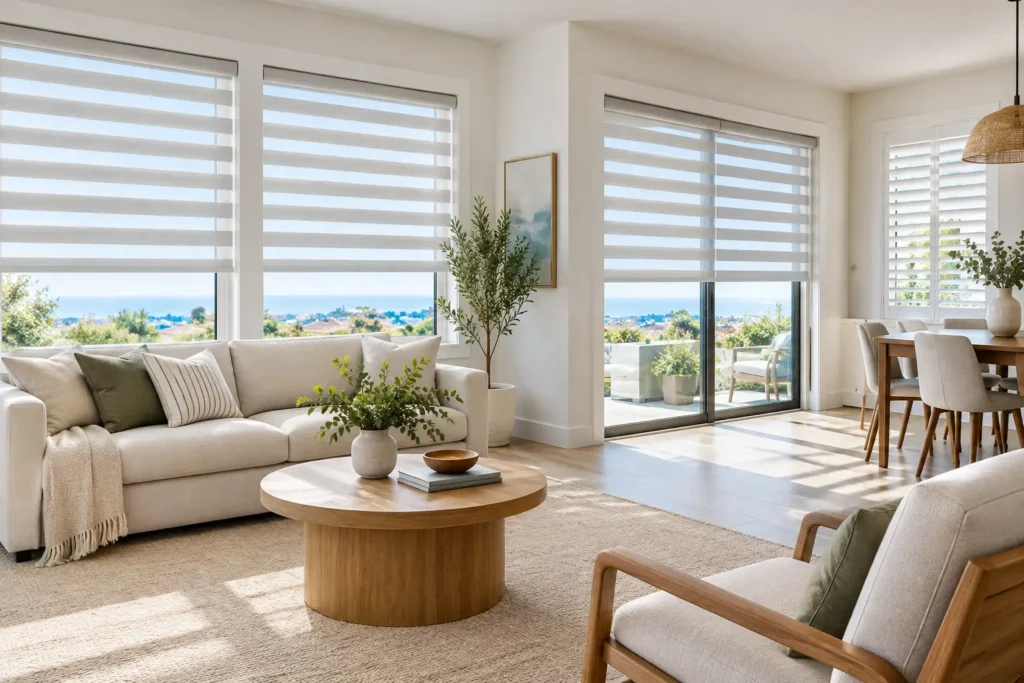
Late-afternoon sun can make a Sacramento living room feel bright and washed out, even when you do not want to close the room off completely. That is where zebra shades can be a good fit. They give you more control than a basic roller shade, with a clean, modern look that does not add much visual weight around the window.
They are not the right answer for every room or every homeowner. Privacy at night, fabric choice, window depth, and how often you want to adjust the shade all matter. Here is the practical side of choosing them.
How zebra shades work
Zebra shades are also called dual shades or layered shades. The fabric has alternating horizontal sheer and solid bands. As the shade rolls, those bands move past one another.
When the sheer bands line up, light comes through and you can often keep some outward visibility. When the solid bands line up, the shade becomes more closed for added shade and privacy. You can also raise the entire shade if you want a fully open window.
That simple design is why many homeowners like them. You can soften harsh light without putting the room into darkness. A roller shade usually gives you an open or closed choice. Zebra shades give you a useful middle setting.
The look is tidy, especially in a room with clean lines, newer furniture, or large windows. The shade rolls into a slim top cassette or headrail, so it does not have the heavier profile of many blinds.
Where they work best
Zebra shades are popular in living rooms, dining rooms, home offices, and bedrooms where daytime light control matters. They are especially helpful on windows that get direct afternoon sun. Instead of dropping a solid shade and losing all the daylight, you can line up the sheer sections and take the edge off the glare.
They also work well when you want to preserve a view during the day. The sheer bands are not invisible, but they allow more visual connection to the outside than a fully closed shade.
Bedrooms can be a good fit if you choose a room-darkening fabric. Still, be realistic about the result. A standard zebra shade has horizontal sheer sections, and light can enter at the edges and through the band structure. If someone needs a very dark room for sleeping, a blackout roller shade, lined drapery, or plantation shutters may be a better choice.
Bathrooms and street-facing rooms deserve a little more thought. During the day, the sheer setting provides good light while limiting direct views in from outside. At night, with interior lights on, sheer fabric does not provide the same privacy. For those windows, plan to use the solid setting after dark, or choose a different treatment if complete privacy is the priority.
Light control, privacy, and heat
A shade can make a room more comfortable, but it cannot change where the sun hits your home. Zebra shades reduce glare and filter sunlight well when properly adjusted. The solid bands offer more coverage than the sheer setting, but the amount of heat control depends on fabric color, fabric density, window size, and whether the shade is mounted inside or outside the frame.
Darker fabrics can look sharp and may cut visible light more noticeably. Lighter colors usually keep a room feeling open and bright. Neither choice is automatically better. A west-facing room with intense afternoon sun may benefit from a denser fabric, while a shaded room may need a lighter one so it does not feel dim.
If heat reduction is your main goal, ask to see the actual fabric samples at the window. Light that feels fine in a showroom can look much different in your own room at 4 p.m. A free in-home quote is useful for this reason. You can compare colors and opacity where the shade will actually be used.
Choosing the right fabric and controls
The fabric is the part you will notice every day. Start with how you use the room, then choose color. A bright kitchen may need soft filtering rather than heavy coverage. A media room or bedroom may call for a room-darkening option. A neutral fabric usually blends into the room, while a contrasting color can make the shade feel more intentional.
Look at the pattern size, too. Wider bands can create a bolder, more contemporary appearance. Narrower bands often look quieter from across the room. On a large picture window, a sample that looks subtle in your hand may show its pattern more clearly once installed.
For controls, cordless operation is a common choice and keeps the window looking cleaner. It is also a practical option around children and pets because there are no loose operating cords. Motorized shades can be worthwhile for tall windows, hard-to-reach windows, or a row of shades you adjust often. They cost more and add components, so they make the most sense when convenience is something you will actually use.
Measure before you fall in love with a style
Zebra shades can be installed as an inside mount or an outside mount. Inside mounting places the shade within the window opening and gives a built-in appearance. It works best when the frame has enough clear depth and there are no handles, alarm sensors, cranks, or trim details in the way.
Outside mounting places the shade on the wall or trim above the window. This is often the better answer for shallow frames, uneven openings, or windows where you want more overlap to limit side light. It can also make a smaller window appear larger.
Do not measure only the width and height and assume the rest is simple. The headrail needs a solid mounting area, and small details can affect the finished fit. Check for window locks that stick out, raised trim, recessed windows, and nearby doors that need clearance. A professional measurement avoids the common problem of a shade that technically fits but does not operate cleanly.
Zebra shades compared with shutters, roller shades, and blinds
Zebra shades are a strong choice when you want soft filtered light and a modern fabric look. They are usually less architectural than plantation shutters, which means they visually recede instead of becoming a major feature of the room.
Plantation shutters offer excellent day-to-day privacy, durable louvers, and a more permanent finished look. You can tilt the louvers for light while keeping the panels in place, and they are often easier to wipe clean. They can be a better long-term choice for bathrooms, busy family rooms, and windows where you want a custom built-in look. They also take up more visual space and are not the lowest-budget option.
Roller shades are simpler. They are a good fit when you want a single piece of fabric with fewer moving parts and a very minimal appearance. They do not offer the same layered light-filtering adjustment as zebra shades.
Horizontal blinds let you angle slats for light, but they have more individual pieces to clean and can look busier. Each option solves a different problem. The best choice depends on whether your first priority is privacy, light control, easy cleaning, appearance, or budget.
Care and everyday use
Zebra shade fabric does not need much maintenance. Regularly use a feather duster, a dry microfiber cloth, or the brush attachment on a vacuum at low suction. Move gently across the fabric rather than pressing hard into it.
Avoid soaking the material or using strong cleaners. Water spots, rubbing, and chemical cleaners can mark the fabric or affect its finish. For a small spot, test a lightly damp cloth in an area that is not noticeable first. If the shade is heavily stained or the fabric is damaged, replacement may be more practical than trying to restore it.
Operate the shade evenly and do not pull it down at an angle. If it starts rolling unevenly, stops in the wrong position, or the control feels rough, have it checked before forcing it. Small issues are often easier to address before they affect the mechanism or fabric.
A shade should make the room easier to live in, not give you another thing to fight with every afternoon. Seeing fabric samples, checking the fit, and talking through privacy needs at the actual window usually makes the decision much clearer. To look at zebra shades in your home, book a free in-home quote at shuttersup360.com or call or text (916) 595-1657.