Blackout Shades for Bedrooms That Sleep Better
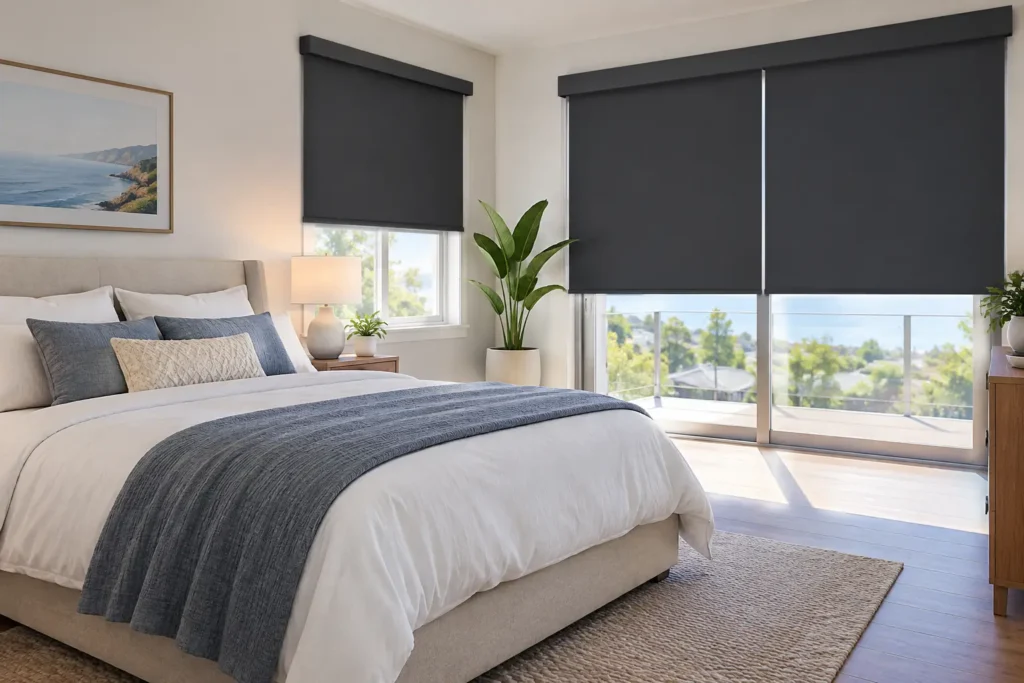
A bedroom can have the darkest fabric available and still let in a bright stripe of morning sun at the edges. That is the part many homeowners do not expect when shopping for blackout shades for bedrooms. The material matters, but so do the shade style, mounting method, window shape, and the small gaps around the frame.
If you work nights, have a baby who naps during the day, or simply want to sleep past sunrise, the right window covering makes a noticeable difference. The goal is not just a darker room. It is better control over light, privacy, and heat without making the window difficult to use.
What “blackout” really means
Blackout fabric is made to block light from passing through the material itself. Hold it up to a bright window and you should not see sunlight glowing through the middle of the shade. This is different from room-darkening fabric, which reduces light but may still create a soft glow in the room.
Here is the honest part: a blackout shade does not automatically create a completely black room. Most light leaks in through the sides, top, and bottom, especially with an inside-mounted shade. A small gap may not bother someone who sleeps soundly, but it can matter a lot in an east-facing bedroom or a child’s room at naptime.
For the darkest result, choose true blackout fabric and talk through the installation details before ordering. A good in-home measurement helps identify where light is likely to get around the shade.
The shade style changes the result
Roller shades are often the simplest option for a bedroom. With blackout material, they give a clean, low-profile look and are easy to operate. They work especially well when you want the window covering to disappear visually during the day. The trade-off is that standard roller shades usually have side gaps, so they may not be the best choice for someone who needs near-total darkness.
Cellular shades are another popular bedroom choice. Blackout cellular fabrics can help soften outside noise and add a layer of insulation, which is useful during Sacramento’s hot summers and cool winter mornings. Their pleated construction has a warmer, softer appearance than a roller shade. They can also be a good fit when heat control is nearly as important as darkness.
Roman shades can use blackout lining and bring more fabric texture into a bedroom. They are a nice choice when the room needs a more decorative finish, but the folds and stack at the top may affect how much of the glass is exposed when the shade is open.
Zebra shades are excellent for flexible light control, but they need a careful comparison if blackout is the main goal. Their alternating sheer and solid bands make it easy to adjust daylight and privacy. Even when closed, though, they are generally better described as light-filtering or room-darkening than truly blackout. They are a strong option for a bedroom where you want soft daytime light, but not usually for a person who needs the room as dark as possible.
Inside mount or outside mount?
This decision has a bigger effect on light leakage than most people realize.
An inside mount sits within the window opening. It looks clean and tailored because the shade is tucked into the frame. But it needs small clearances on each side so the shade can operate properly. Those clearances create the side gaps where sunlight gets through.
An outside mount is installed above and beyond the window opening. Because the shade overlaps the window, it can block more light around the edges. This is often the better choice for blackout shades for bedrooms, particularly on shallow windows or windows with uneven frames.
Outside mounting is not always the best visual fit. It can cover part of the trim, and the shade needs enough wall space above the window for the hardware. Still, when darkness is the priority, a little overlap is usually worth it.
Why measurements should not be guessed
Window openings are rarely perfectly square. Older homes, remodeled rooms, and windows with decorative trim can all create small challenges. Measuring width in one spot and ordering from that number can leave an unexpected light gap or cause a shade to rub against the frame.
For an inside mount, depth matters along with width and height. For an outside mount, the installer needs to look at the trim, nearby doors, handles, and how far the shade should overlap the opening. This is one reason a free in-home quote is useful: you can see samples in your own light and get an answer based on the actual window, not a generic measurement chart.
Ways to reduce light around the edges
If you are sensitive to early light, ask about the details that make a blackout setup perform better. Side channels can limit the light coming in beside certain shades. A wrapped valance or cassette at the top can help cover the gap above the roller. An outside mount with a generous overlap also makes a real difference.
Layering is another practical option. A blackout roller or cellular shade paired with drapery can reduce side gaps and make the room feel softer. It is not necessary for every bedroom, and it adds fabric to maintain, but it is one of the most effective approaches for bright windows.
Keep expectations realistic around sliding glass doors and French doors. These openings need clearance for handles and everyday access, so there is often a balance between full coverage and easy operation. The best solution depends on how often the door is used and whether privacy, darkness, or insulation comes first.
Privacy and heat matter too
At night, blackout shades provide strong privacy when lowered. During the day, they are either up or blocking the view, which can feel limiting in a bedroom that overlooks a yard or has a nice view. If you want privacy without closing the room off all day, consider a dual-shade setup or a light-filtering shade in another part of the home. For the bedroom itself, many people are happy with blackout because sleep is the main purpose.
Blackout fabrics also reduce solar heat coming through the glass. They are not a replacement for insulation or window work, but they can make a sunny bedroom more comfortable. A shade installed close to the window generally performs better than one hanging farther into the room.
Color can affect the look of the room, but the backing and fabric construction do most of the work for light control. Do not assume a dark gray or black shade is automatically blackout. Always check the actual fabric sample and its opacity rating.
Motorized blackout shades can be worth it
Motorization is useful when bedroom windows are tall, behind furniture, or part of a morning routine. You can lower shades at bedtime and raise them gradually in the morning without getting out of bed. It also removes cords, which is a cleaner and safer choice around young children and pets.
It does add cost and introduces a battery, charging, or power decision. For one easy-to-reach window, a standard cordless shade may be all you need. For several windows or hard-to-reach openings, motorization can be a convenience you use every day.
A simple way to choose
Start by deciding how dark you truly need the room to be. If you just want to soften sunrise and improve privacy, a room-darkening shade may be enough. If daylight wakes you up or the room is used for daytime sleep, choose true blackout fabric and prioritize outside mounting or light-control features.
Then think about how you use the window. A roller shade keeps things simple. A cellular shade adds insulation. A Roman shade adds softness. Zebra shades offer flexible daytime light but are not usually the answer for a fully dark bedroom.
The best option is the one that fits the window, your sleep habits, and the way the room needs to look during the day. Shutters Up 360 can measure the window, show you the material differences in person, and help you avoid surprises with gaps or fit. Book a free in-home quote at shuttersup360.com, or call or text (916) 595-1657.