How to Measure for Plantation Shutters at Home
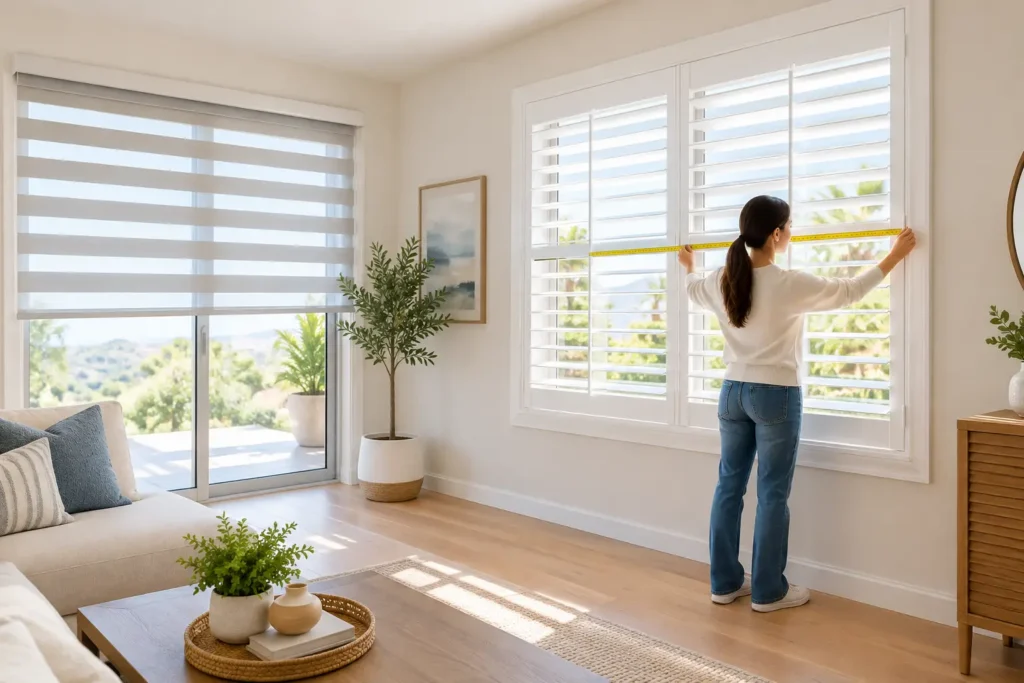
A window can look perfectly square and still be off by enough to cause problems with a shutter panel. That is why learning how to measure for plantation shutters means more than taking one width and one height. You need to know where the shutter frame will sit, whether the opening is square, and what could get in the way when panels open.
If you are gathering rough sizes for a quote, a careful homeowner measurement is very helpful. If you are ordering custom shutters, though, the final measurement should be done by the installer. A local installer sees the details that are easy to miss: window cranks, tile returns, uneven drywall, alarm sensors, molding, and windows that are wider at the top than the bottom.
Start by Choosing an Inside or Outside Mount
Before measuring, decide whether the shutters will mount inside the window opening or around it. This decision changes every number you take.
An inside mount places the shutter frame within the window opening. It has a clean, built-in look and works well when there is enough depth for the frame and louvers. Inside-mounted shutters are popular for standard recessed windows, but the opening must be measured carefully because walls are rarely as straight as they appear.
An outside mount places the shutter frame on the wall or trim around the opening. This can be the better choice when a window has little recess depth, an out-of-square opening, a crank handle, or a large sill that limits the available space. Outside mounts can also make a small window appear larger. The trade-off is that the frame is more visible, so the surrounding trim and wall space matter more.
Do not choose an inside mount just because it looks more flush. If the window does not have the needed depth or clearance, an outside mount will fit and operate better.
Tools You Need to Measure for Plantation Shutters
Use a steel tape measure with clear 1/16-inch markings. A fabric tape or retractable tape that bends easily can lead to small errors. You will also want a pencil, paper or a notes app, and a level if one is handy.
Measure each window separately, even if several windows look identical. In homes around Rocklin, Roseville, and Sacramento, it is common to find slight differences between windows on the same wall. One may have deeper drywall returns, a different sill, or a small variation in trim.
Write down the width first, then the height. Label the room and window location clearly, such as “living room, left of fireplace.” Also note anything unusual nearby, including handles, locks, outlets, blinds, or trim damage.
How to Measure an Inside-Mount Shutter Opening
For an inside mount, measure the opening in three places for width and three places for height. Do not round measurements up or down.
Measure the width in three places
Measure from the inside edge of the opening at the top, center, and bottom. Keep the tape straight and pull it snug without forcing it into the corners. Record all three measurements.
The narrowest width is usually the key number because the shutter frame must fit through the tightest part of the opening. A difference of even 1/4 inch can tell an installer that the opening is not square or that drywall has a heavy texture buildup on one side.
Measure the height in three places
Next, measure from the top of the opening down to the sill at the left, center, and right. Again, write down every measurement rather than choosing the one that looks best.
For a window with a sloped sill, measure to the point where the shutter frame will actually rest. A sloped sill can affect the bottom frame, panel alignment, and the way louvers close. This is one of the reasons a final in-home measurement is worthwhile.
Check the depth and clearances
Depth is just as important as width and height. Measure from the front edge of the opening back to the window or any obstacle. Look for crank handles, latch hardware, protruding tracks, or security sensors. These can interfere with shutter panels or louvers.
Also inspect the sill. A deep, flat sill is usually simple to work with. A narrow sill, a rounded sill, or a sill crowded by a window track may require a different frame choice or an outside mount.
How to Measure for an Outside-Mount Shutter
Outside-mount measurements start with the size of the area you want covered, not simply the glass size. Measure the intended frame width and height from the outer edges where the shutter frame will sit.
For width, measure across the window opening and include the space needed for the frame on both sides. For height, measure from the planned top edge to the planned bottom edge. If the shutter will sit on a sill, include that detail in your notes.
Before settling on the size, check that you have a flat mounting surface around the window. Decorative trim, uneven wall texture, crown molding, or a nearby cabinet can limit how wide or tall the frame can be.
Outside mounts are often forgiving of uneven openings, but they still need solid planning. You want the shutter to cover the opening evenly and leave enough space for the panels to swing open. If panels open into a tight walkway, toward a faucet, or against a cabinet, tell the installer before the order is made.
Measure the Details That Cause Most Fit Problems
The basic width and height are only the start. A good shutter measurement also considers how the window functions and how you use the room.
Take a close look at window cranks and handles. Some can be removed or folded down, while others need extra clearance. Note tilt-in windows, sliding windows, and French doors as well. Their hardware and moving parts can affect frame placement.
If the window has existing blinds or shades, decide whether they will be removed. Plantation shutters are normally installed as a complete window treatment, so old hardware may need to come down. If you want to keep a shade behind the shutter for extra light control, make sure there is enough depth for both products. This can work in some windows, but it depends on the opening.
For bay windows, angled windows, arches, and very wide openings, do not rely on a single overall measurement. These windows need panel breaks, frame angles, and opening clearances planned as part of the layout. A professional measure is especially valuable here.
Check Whether the Opening Is Square
A quick diagonal check can reveal a lot. Measure from the top left corner to the bottom right corner, then from the top right corner to the bottom left corner. If the measurements differ noticeably, the opening is out of square.
That does not mean shutters cannot be installed. It simply means the frame and panels need to be planned around the condition of the opening. An experienced installer may use a frame style that hides small gaps or recommend an outside mount where it will look cleaner.
Avoid trying to correct an uneven opening by changing the numbers yourself. Give the actual measurements and let the final measuring appointment determine the right deductions, frame choice, and installation approach.
Common Measuring Mistakes to Avoid
The most common mistake is measuring only once. A single middle measurement may miss a narrow spot at the top or bottom. The second mistake is rounding to the nearest inch. Plantation shutters are custom products, and small fractions matter.
Another issue is measuring only the glass. Shutters mount to the opening or surrounding wall, not to the visible glass area. Measuring glass can make the finished shutter too small or leave a poor-looking gap.
Homeowners also sometimes forget to account for how panels open. A shutter may fit the window but still be inconvenient if a panel blocks a door, hits a cabinet, or makes it hard to reach a window crank. Think about daily use, cleaning, and access before choosing the panel layout.
Finally, do not make your own deductions for clearance unless the manufacturer has given you exact instructions for a specific shutter system. Different frames need different allowances. For a quote, provide the true opening measurements. For an order, let the installer take responsibility for final dimensions.
When a Free In-Home Measure Makes Sense
A homeowner measurement is great for getting a conversation started, especially if you are comparing shutters with zebra shades, roller shades, or blinds. Shutters generally offer stronger privacy, a finished built-in look, and durable light control. Shades and blinds can be a better fit when you want a lower-profile option, softer fabric look, or a particular budget approach.
The final decision often comes down to the window itself. An in-home measure lets you see samples, compare louver sizes and frame styles, and get an honest answer about whether a repair, new shutter panel, or a different window covering makes more sense.
A good measurement is the first step toward shutters that look straight, close properly, and feel like they belong in the room. For a free in-home quote, call or text Shutters Up 360 at (916) 595-1657.